Also known as Knoll House it was the first house in Keighley built for comfort, remaining the finest for many years.
1790
John Greenwood Snr, 1737-1807, a prosperous Cotton Spinner, sold his croft at Knowle to the Keighley>Halifax Trust for the building of the new turnpike road.
1794
John Greenwood Snr. having built himself Cabbage House and and Mill, in Keighley, then purchased Rawlings Field and part of Knowle Farm off James Lund to build a house for his son John Jnr., 1763-1846, at the time of his marriage. This Close was very near the original holding at Knowle.
1799 to 1803
The final completion of the Mansion must have been between these dates as only the last child, Sarah Hannah, of John Greenwood Jnr was born at Knowle House. The style and interior of the house reflected the status of the wealthiest family in Keighley, at the time. Sarah Greenwood-nee Sugden, wife of John Jnr. could not have enjoyed the luxuries of Knowle House for long, dying on 25th March 1803, 42 days after the birth of her daughter. Knowle House continued to be the family base while they slowly severed links with the Textile trade.
On the death of John Greenwood Jnr. his sons, Frederick an Edwin sell the Knowle and retire to the recently built country estate, Swarcliffe Hall to live the life of Gentlemen.
1851-1861
William Lund, the son of James Lund who originally sold the land to John Greenwood Snr, is in residence. William Lund & Sons owned and ran North Beck Mills. James, his son, moved to Malsis Hall, his wife’s family property, after the death of his father in 1861. James planned out the area we now know as Holycroft- though he did not actually build it, possibly as a Model Village for his workers at North Beck Mill, he also gave part of the land from his estate for the setting out of Lund Park.
1871
George Henry Stansfield J.P. and Banker was in residence with his wife, two small children and 6 live-in servants.
In 1879 William Clough, of Grove Mills, married and moved into Knowle House, where they raised their family of 9 children. They stayed here until his death in 1908.
Percy Clough of Grove Mills, a nephew of William Clough took over the house as his family residence, being convenient for Grove Mills, where he was actively involved in the business. on his death the Clough association with the house ended, it being sold to the Co-operative Society to use as a Chapel of Rest.
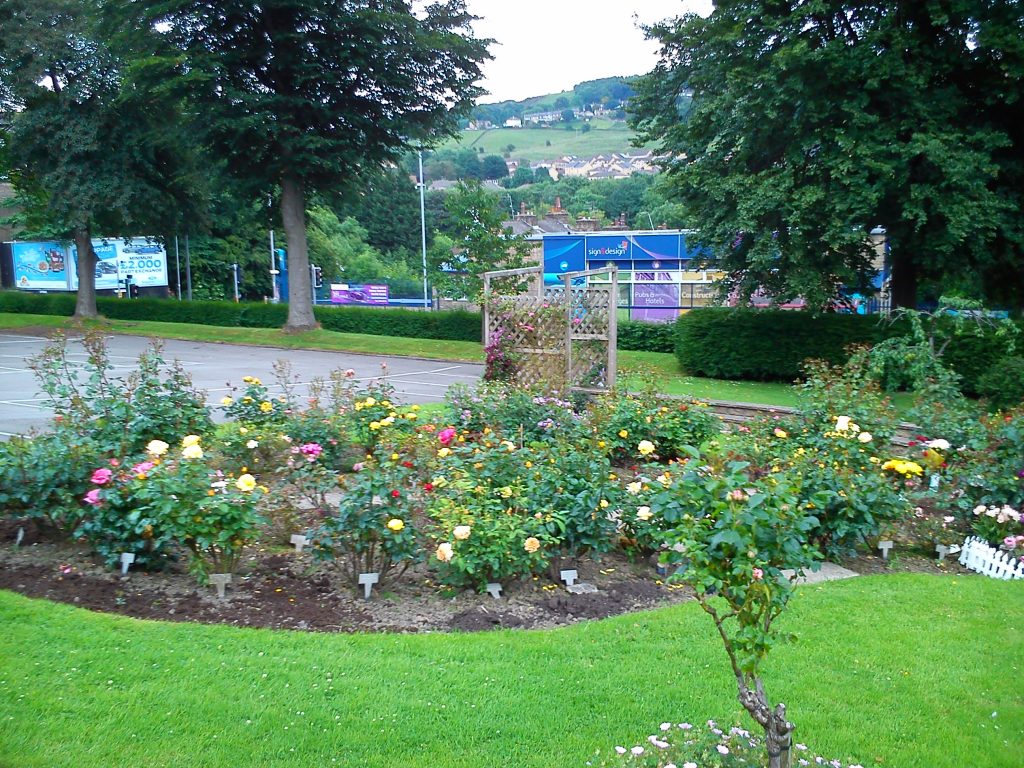
The house, while still retaining many of it’s original features is now a place of peace and contemplation with it’s calm atmosphere and well tended Memorial Gardens.