October March for Jobs

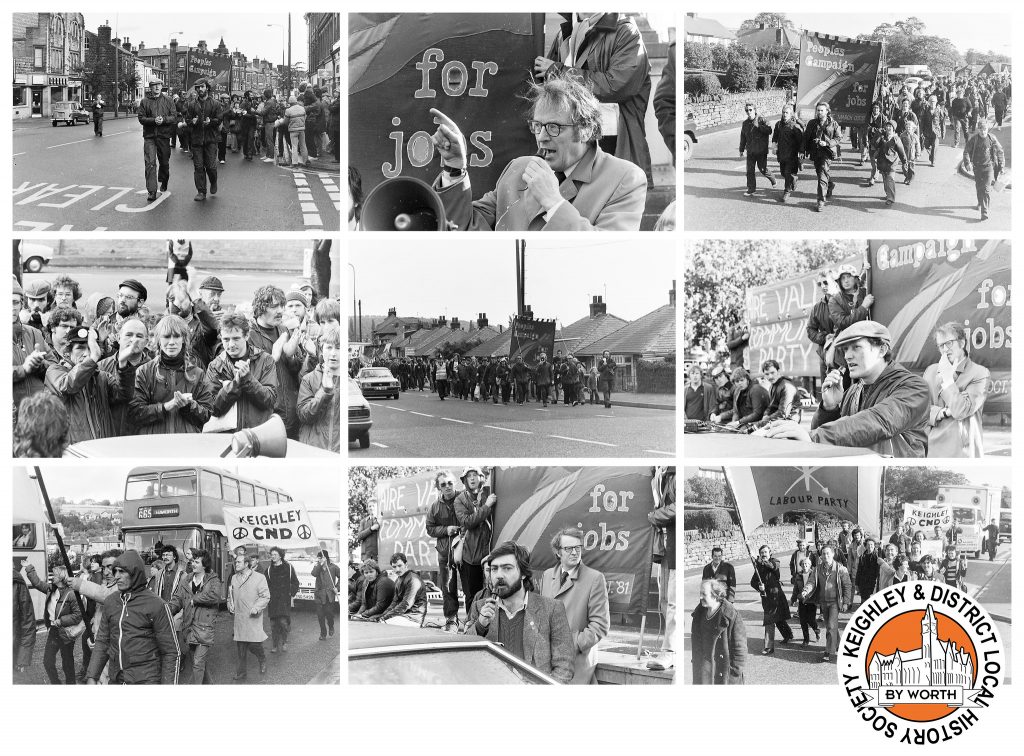
The Trans-Pennine March for Jobs from Sheffield to Blackpool passed through Keighley on Sunday 11th October 1981. 100 members of the People’s Campaign for Jobs marched into the town and joined a rally in Town Hall Square. There were cries of “Maggie, Maggie, Maggie, out, out, out!” The crowd gathered in Town Hall Square were addressed by Steve Davison, chairman of Keighley Trades Council, by Frank Brammah of Keighley Unemployed Workers Association, and by the town’s MP, Bob Cryer. A Keighley News photographer captured the event and the story was covered in the newspaper the following Friday.

Keighley News, 16th October 1981: “Left-wing Labour MP Mr Bob Cryer said the march was part of the struggle against Thatcher policies and with unity and determination they would win. He claimed the Prime Minister was using unemployment as a weapon against the organised trade union movement. Mr Cryer condemned government cuts in welfare benefits, social services and education while they were spending six or seven billion pounds on Trident and Cruise missiles.”

The marchers were given tea by St. Anne’s Justice and Peace Group followed by a service at St. Anne’s Roman Catholic Church. There was a civic reception from the Lord Mayor of Bradford, Councillor Danny Coughlin, and free entertainment in the evening at the Victoria Hotel. Marchers spent the night in private homes or at Keighley Central Youth Club.

In 2021, Keighley and District Local History Society acquired an extensive collection of photograph negatives taken by the Keighley News. Groups of negatives were held in small wallets with the date and basic labelling written on the wallet. These photographs are from that collection.
Guest Speaker: Colin Kirkham

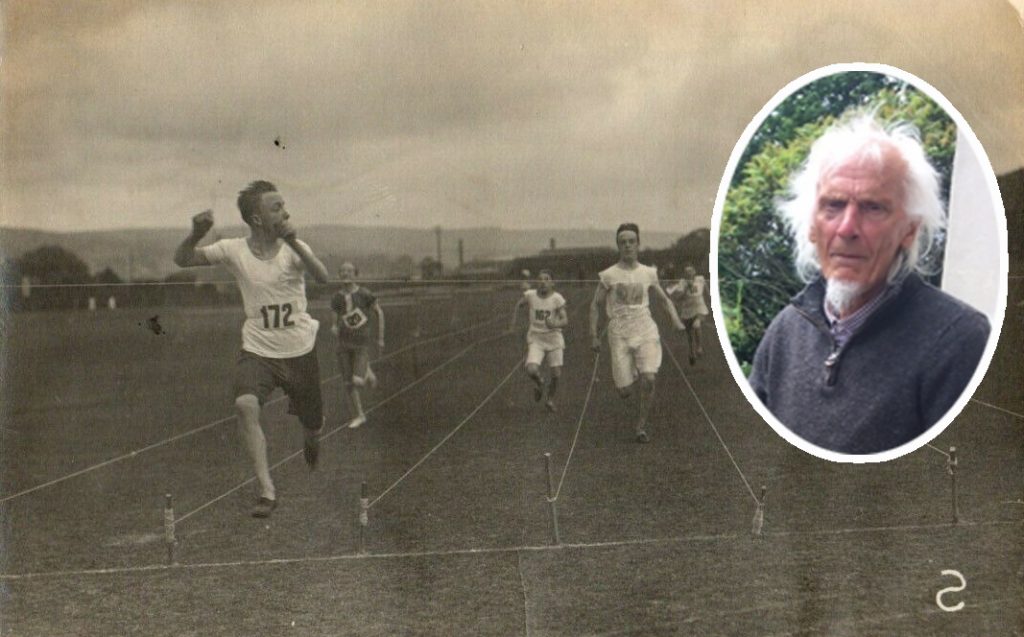
A reminder that this month’s History Society meeting (this Wednesday – 12th October) is on Zoom only (i.e. not in the Library) and will be medal-winning long-distance runner Colin Kirkham talking about the various running/athletics/walking clubs that proliferated in Keighley in the late 19th/early 20th century.

The talk is only open to paid-up members of the History Society. Members will have received their email from Anne-Marie with details on how to join. The talk starts at 7.30pm but it’s probably best to try joining up 15~20 minutes early in case there are difficulties (and we usually have an update/chat beforehand).

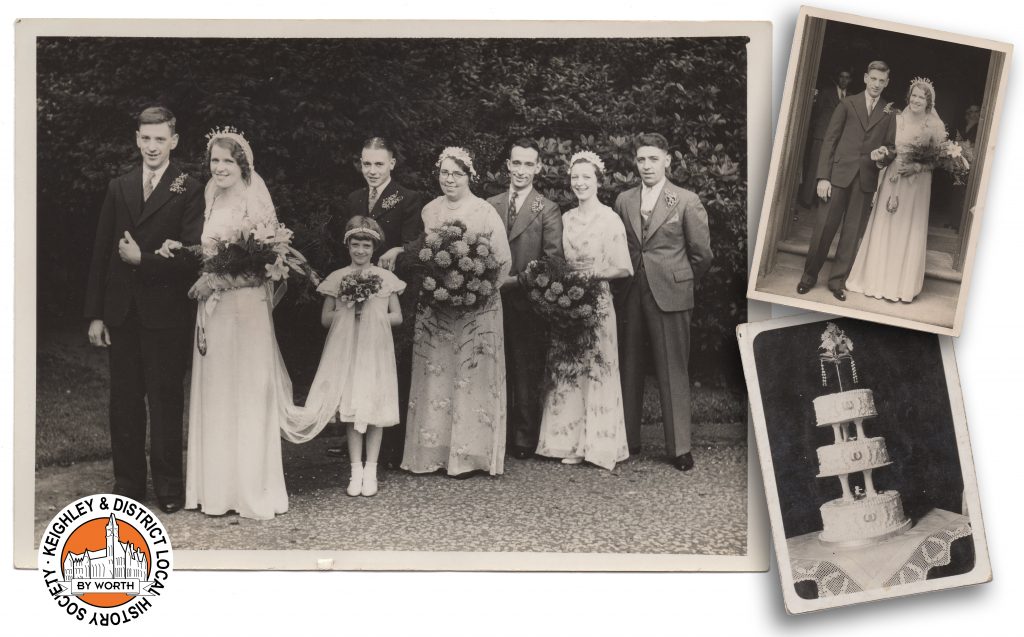
Wedding at St. John’s in 1936

The marriage of George Bown (1904-1993) to Alice Ayers (1908-2010) took place at St John’s Church, Ingrow, on 10th October 1936. George and Alice lived at Cliffe Terrace in Ingrow. George was a pattern maker with Walter Denby’s. He was also a founder member of Ingrow St. John’s cricket team when it relaunched in February 1922, captained the team, and, much later, served as its president in the late 1980s/early 1990s.

During the Second World War George was an Air Raid Prevention (ARP) officer and served in the Keighley Civil Defence Ambulance Service. Wounded soldiers were repatriated to Keighley railway station and were then taken up into hospitals in the Yorkshire Dales. As a local agricultural engineer who used to work on farms, George knew the area and the routes to take during the blackouts.

Shown in the main photograph are (L to R) George Bown, Alice Bown, Joan Ayers (niece to Alice), Reuben Clegg, Ethel Ayers, Arthur Ayers, Madge Ayers, Herbert Ayers. George and Alice went on to have two children: Alison and Derek. Alison appeared in some of the 1950s pantomimes performed in the St. John’s Sunday School hall.

The wedding was photographed by Keighley photographer George A. Shore. Shore was a popular Keighley-based freelance photographer who simultaneously ran his photography business alongside running a carpet and linoleum store in Keighley market. Examples of his work exist from the 1930s and 1940s, and included outdoor events such as Keighley Gala, the coronation of King George VI, Victory street parties at the end of the Second World War, theatre productions, weddings, and landscapes. Many of his photographs were commissioned by and printed in the Keighley News. His original prints could be embossed “G. A. Shore” or stamped on the back in a circle “Geo. A. Shore”. In his other lines of business, Shore was an early member of Keighley Road Club and used to deliver rolls of carpet and linoleum via his motorbike and sidecar, aided by assistant Sam Scaife. Shore died in 1946.

The photographs are from the personal collection of Derek and Sonia Bown, loaned to Keighley and District Local History Society in 2017.

The Rebel Maid of 1922

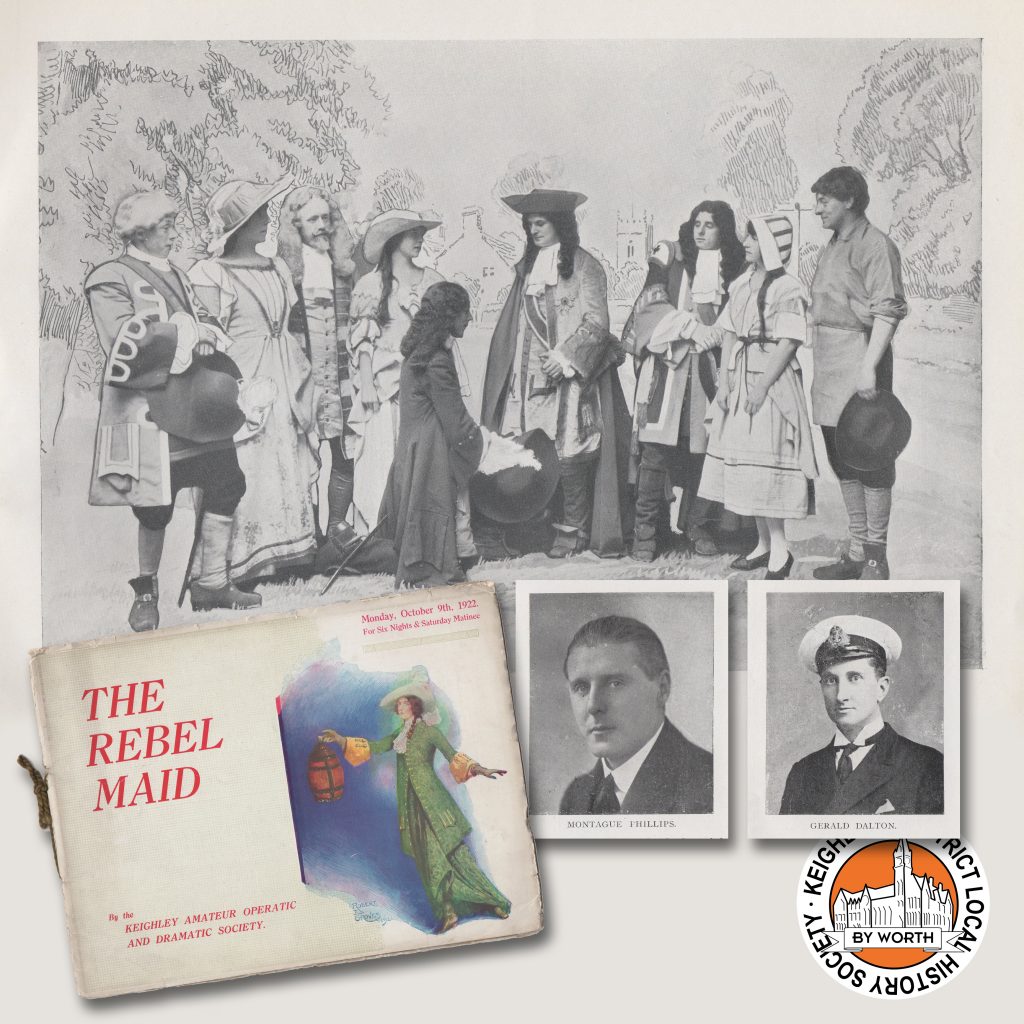
Keighley Amateur Operatic and Dramatic Society’s production of “The Rebel Maid” played at the Hippodrome Theatre in Keighley for six nights (and a Saturday matinee) from Monday 9th October 1922. The romantic light opera was written by Alexander M. Thompson, with lyrics by Gerald Dalton and music by Montague F. Phillips. Dalton and Phillips had actually created the opera while serving in the Royal Naval Volunteer Reserve during the First World War. The musical director was Joseph Harker, while the producer and stage director was Avalon Collard.

The story is set in the autumn of 1688 and centres around the rebellion against the Stuart dynasty, in the form of King James II, led by Prince William of Orange (played by George Best). The action takes place in the mansion of Lord Milverton (played by Edward Greenwood) on the coast of Devon, the local inn ‘The Jolly Fishers’ and the village green. Amongst the plots and counter-plots is a romance between Derek Lanscombe (Watson Walker) and Lady Mary Trefusis (Edith Robson), who’s secret identity is ‘Snow Bunting’ a.k.a. the Rebel Maid. The production also starred Tom Coates, Ernest Marsden, Frank Shuttleworth, Alan Petty, Sydney Calvert, Mrs Percy Taylor, Mabel Rothera, Hilda Smith, Kitty Connolly and Edith Smith.

The 44-page programme was printed by The Keighley Printers Ltd. of High Street, Keighley. It measures approximately 255 mm by 193 mm (although the internal pages are slightly smaller than the cover). The programme was part of an anonymous donation given in 2022.

KHS_P_622_ (1)
Click on the above to see the full programme.

Temple Street Windows

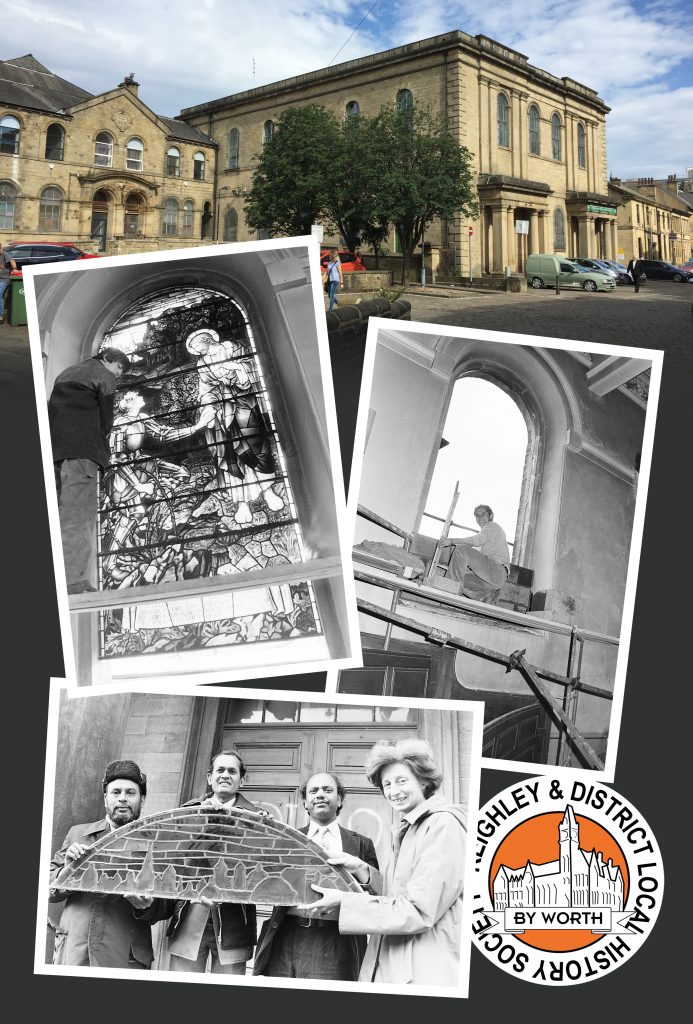
These Keighley News press photographs were taken on 7th October 1981 to record the removing of the stained-glass windows from the old church on Temple Street.

The two war memorial stained glass windows from the Temple Street Methodist Chapel were ‘Two Minstrel Angels with Harps’ and ‘Christ Receiving a Soldier in Heaven’. The windows were designed by J. Henry Dearle and were made in 1921 by Morris & Co. They were originally installed in Temple Street Methodist Chapel, on either side of the organ, to commemorate the members of the congregation who were killed during the First World War.

The windows were given to Bradford Art Galleries and Museums by the Bangladesh Islamic Association after they took over the chapel building. The two windows are now on display in the Stained Glass Gallery, at Cliffe Castle Museum.

Eric Lund in his column in the Keighley News, 16th October 1981: “When I went along to the former Temple Street Methodist Chapel last week to see those two beautiful stained glass memorial windows removed, I was saddened to see the wanton damage which has been done to the building and adjoining Sunday School premises… At one time the idea was to have the area cleared ready to make way for new development at some future time. But a conservation order was put on the whole site and the hope was that owners would set about restoring some of the historic buildings… The Bangladeshi Islamic Association have impressive plans to convert the old chapel, and already they have held some prayer meetings in the ground floor area which they have now cleared of its former chapel pews.”

In 2021, Keighley and District Local History Society acquired an extensive collection of photograph negatives taken by the Keighley News in the 1980s. Groups of negatives were held in small wallets with the date and basic labelling written on the wallet. These photographs are from that collection. The colour photograph of the former church was taken by Tim Neal in 2018.
Festival of Cycling Weekend, 1969

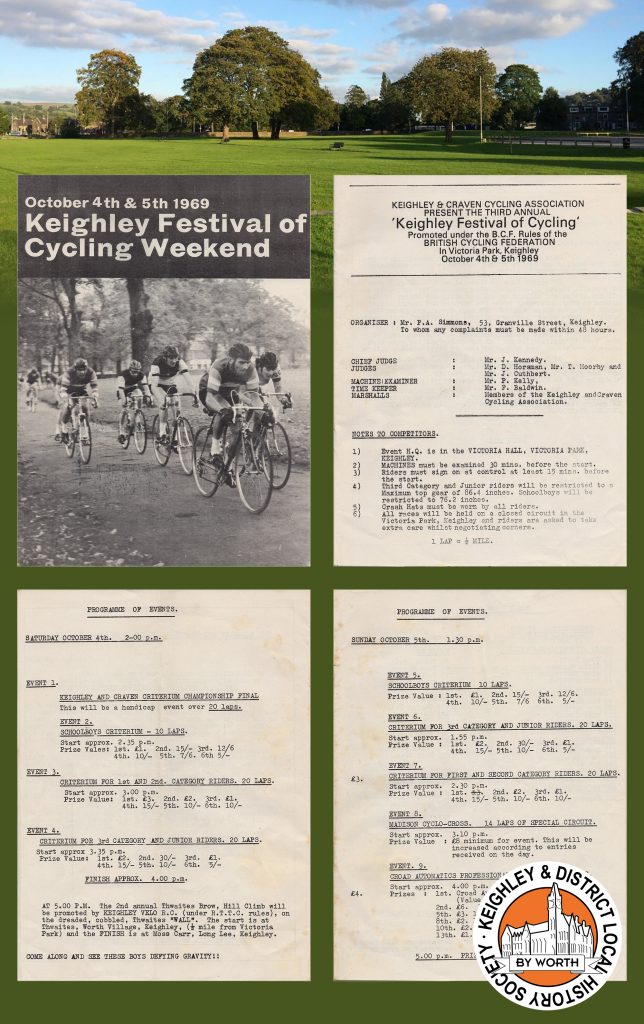
The third annual Keighley Festival of Cycling Weekend took place over the weekend of the 4th and 5th of October 1969. It was staged in Victoria Park and was organised by the Keighley & Craven Cycling Association. It included criterium racing, cyclo-cross and the notorious Thwaites Brow hill climb. Riders came from all around the UK to compete.

From the programme for Saturday: “At 5.00 pm, the second annual Thwaites Brow Hill Climb will be promoted by Keighley Velo R. C. (under R. T. T. C. rules) on the dreaded, cobbled, Thwaites ‘wall’. The start is at Thwaites, Worth Village, Keighley (1/2 mile from Victoria Park) and the finish is at Moss Carr, Long Lee, Keighley. Come along and see these boys defying gravity!!”

Across the weekend, amateur riders from Keighley included C. Grayson, D. Tate, J. Cuthbert, D. Horsman, A. Knowles, G. Fox and J. Wray from Keighley Velo, P. Kennedy, J. Holmes, G. Halls, T. McDonald and P. Loftus from Keighley St. Christopher’s C. C.

The programme for the event was loaned to the History Society for scanning by Derek Bown in 2020. The full programme is available to view on the History Society’s Flickr site.

Mayoral Ball, 1969

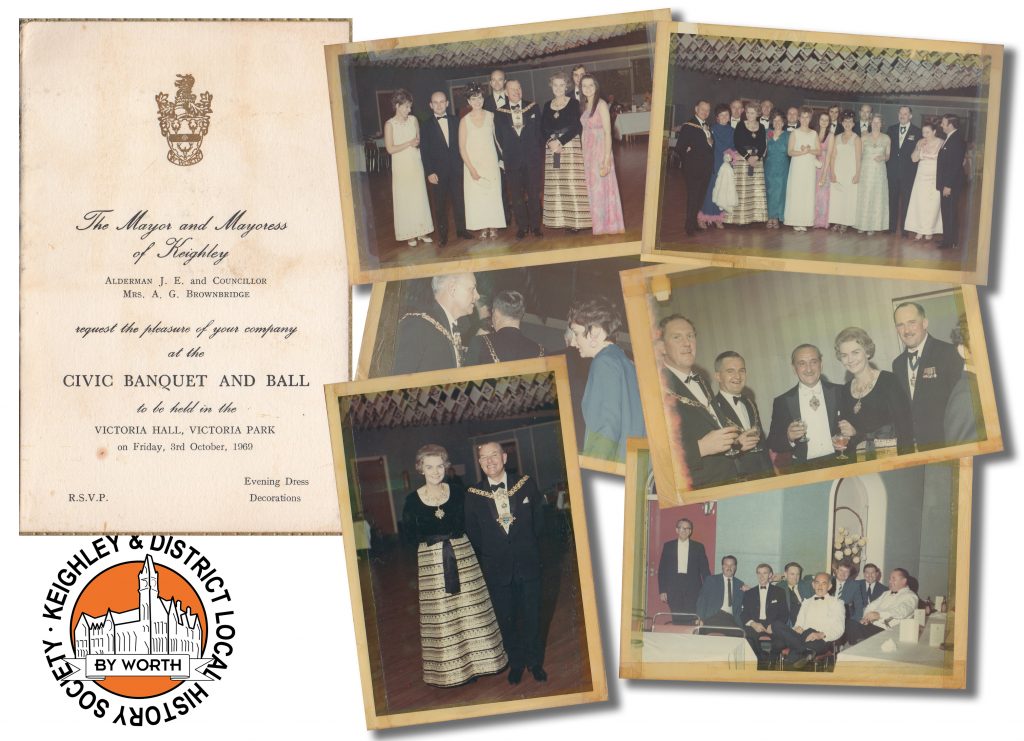
The Mayor and Mayoress of Keighley, Alderman John Edward Brownbridge and his wife, Councillor Alice Gertrude Brownbridge held a Civic Banquet and Ball held at Victoria Hall in Victoria Park on Friday 3rd October 1969. Tickets cost £2 and five shillings each.

The evening started at 7.30 pm with a reception, followed by dinner at 8 pm. Guests were served smoked salmon, followed by a choice of consomme with sherry or cream of mushroom soup. The main course was roast duckling with saute and creamed potatoes, garden peas and cauliflower. Dessert was a choice of chocolate gateau or fresh fruit salad. The meal was rounded off with a cheese board, and petit fours or After Eight mints with coffee. The evening was concluded with dancing until 1 am, accompanied by Edwin Harper and His Band, and by Lady Jane and the Heatwave.

Guests of the Mayor and Mayoress included their four daughters and other members of the family, the Lord Mayor and Lady Mayoress of Bradford (Alderman E. Newby and his wife), the Mayor and Mayoress of Dewsbury (Councillor N. G. Preston and his wife), the Mayor and Mayoress of Halifax (Alderman J. Liley and his wife), the Deputy Mayor and Mayoress of Keighley (Alderman W. A. Broom and his wife), and the Mayor and Mayoress of Morley (Councillor R. Parker and his wife). In all, civic leaders from 20 towns and districts were present alongside leading townspeople and officials from Keighley.

The Keighley News wrote up the event on 10th October 1969: “It was a glittering occasion and more important still – an absolute sell-out. The original plans for 280 guests were stretched to accommodate 320 and 100 further applications for tickets had to be refused… Dress wise it was extremely colourful. The Mayoress of Keighley was especially outstanding in a gown which featured a plain black velvet top and a skirt banded in gold and matching black.”

The invitation and photographs are held in a scrapbook of newspaper cuttings, photographs and other ephemera that record the Mayoral Year of Alderman John Edward Brownbridge from May 1969 to May 1970. The scrapbook now belongs to their granddaughter and was loaned to the History Society for scanning in 2019 by David Seeley.

Cliffe Castle 110 years ago…

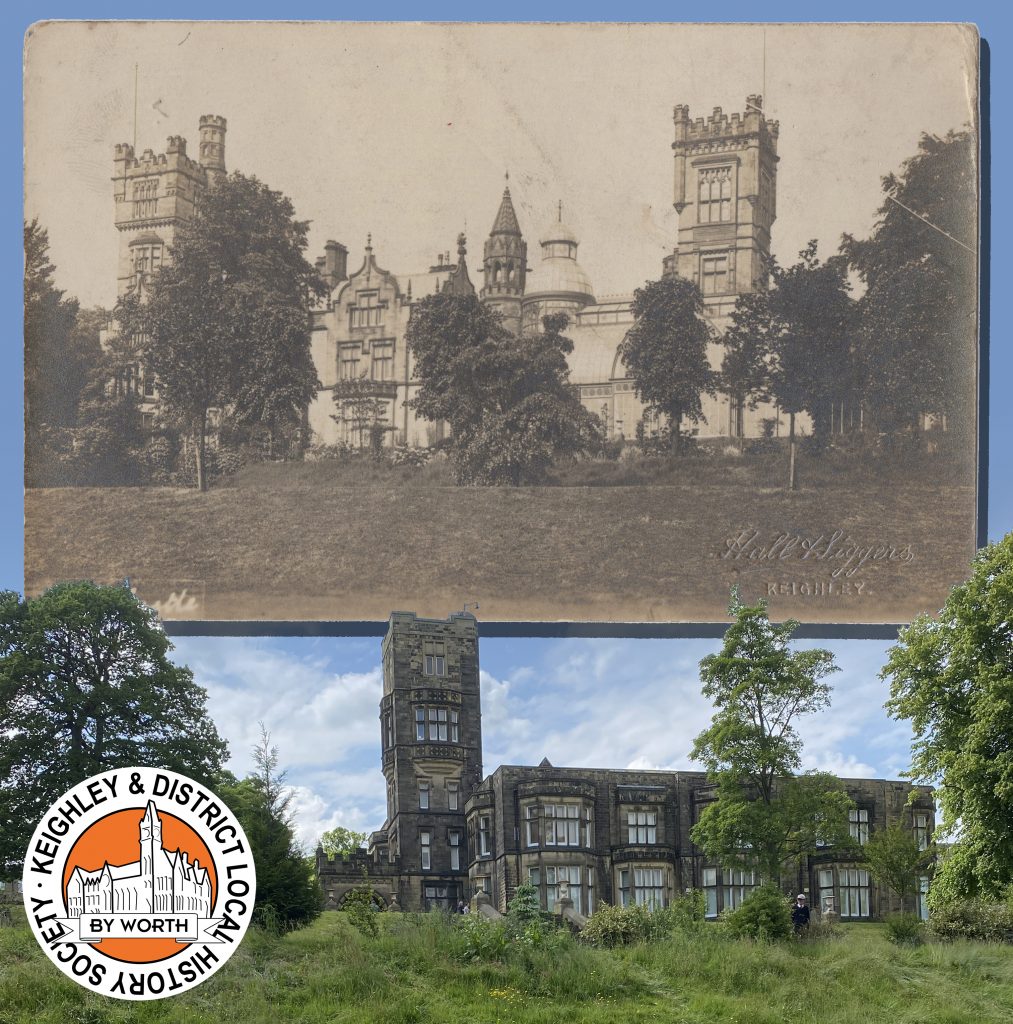
This postcard of Cliffe Castle was posted on the 29th of September 1912. The original photograph dates from around 1910 when the house was the private home of the Butterfield family.

Cliffe Castle is a Victorian mansion, built as Cliffe Hall at the height of Keighley’s industrial prowess by architect George Webster for local lawyer Christopher Netherwood. It was purchased by the Butterfield Brothers in 1848 to serve as the family home and was used as a summer home by Henry Isaac Butterfield (1819–1910) from 1878, who set about having it redesigned as a Gothic castle by architect George Smith. At this point it was renamed Cliffe Castle. It then passed to his son, Frederick Butterfield, until his death in 1948. It was purchased by Sir Bracewell Smith (Keighley-born hotel entrepreneur and Lord Mayor of London) on behalf of the people of Keighley in 1950 and opened as the town’s museum in 1959. Sadly for safety and maintenance reasons, several of the features added to the ‘castle’ had to be removed.

The postcard was published by Hall & Siggers of Keighley (embossed in the bottom right corner of the front). Hall & Siggers was a partnership between Harry Hall and Frank Siggers who had worked together in Chelmsford. Looking for fresh fields from which to operate, the pair moved with their families up to Keighley in 1909. Hall & Siggers bought up the studio of Keighley photographer Alexander Jennings at 105 Cavendish Street. In 1919 the ten-year agreement between the businessmen was coming to an end. Siggers went to Leicester, and Harry Hall and his son Gilbert became partners in the business. In 1926 Gilbert became sole proprietor of Hall & Siggers, although his father continued to lend a helping hand well into his 80s. The business flourished, including expanding to a second studio in Skipton from 1927 to 1934. Up to eight assistants were employed across both shops. In 1935 the business relocated to 4 Cavendish Street. As a firm they took individual and group portraits as well as building and landscape photography. Their work was included in various official Keighley Corporation publications. Gilbert continued the Hall & Siggers photography business up until July 1955 when he and his wife retired back to Essex.

Postcard from the personal collection of Tim Neal. Colour photograph taken by Tim in 2022.